
RoboCup 2026 Symposium

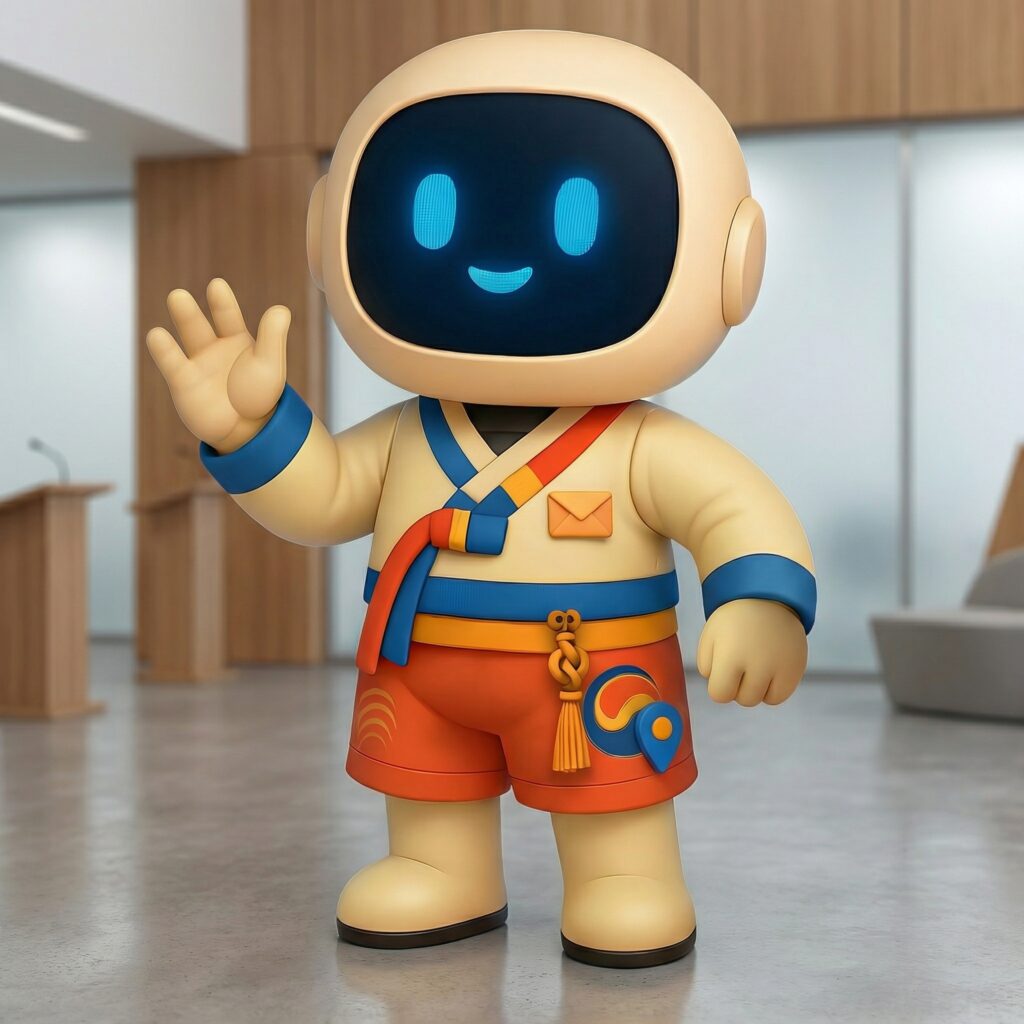
The 29th RoboCup International Symposium will be held on 6 July 2026 at Songdo Convensia, Incheon, Republic of Korea, in conjunction with RoboCup 2026 (30 June – 6 July 2026).
The Symposium is the main scientific forum of RoboCup, bringing together researchers and practitioners from around the world to present and discuss innovative research in robotics and artificial intelligence.
Researchers are invited to submit their work independently of whether they participate in the RoboCup competitions.
Important Dates
Submission of Full Papers
8 April 2026
Notification to Authors
29 May 2026
Camera-Ready Submission
19 June 2026
Symposium Date
6 July 2026
Venue
The RoboCup 2026 Symposium will be held in Incheon, Republic of Korea, in conjunction with RoboCup 2026.
The symposium venue provides participants with direct access to RoboCup competitions, exhibitions, and related events, offering a unique environment for exchange between academia and practice.
Location:
Songdo ConvensiA, 123, Central-ro, Yeonsu-gu, Incheon, Republic of Korea
Call for Papers
SUBMISSION AND PROCEEDINGS
All papers will be peer-reviewed and evaluated by members of the Program Committee.
The proceedings of the RoboCup International Symposium will be published and archived within the Lecture Notes in Artificial Intelligence (LNCS/LNAI) series by Springer-Verlag after the conference.
Papers should be formatted following the LNAI author guidelines(https://www.springer.com/gp/computer-science/lncs/conference-proceedings-guidelines) and must be electronically submitted through EasyChair (https://easychair.org/conferences/?conf=rcs26).
Submission Types:
- Main Track: Submissions are limited to 12 pages (including references).
- Open Platforms & Tools: Submissions are limited to an Extended Abstract of max 4 pages, including a mandatory URL to a tutorial website (see track details below).
OPEN PLATFORMS & TOOLS TRACK
To foster practical exchange within the robotics community, the former Development Track has been reimagined for 2026 to focus on usability and interactivity.
We invite submissions of open-source hardware designs, software frameworks, tools, datasets, and benchmarks that other teams can use. The goal of this track is to reward the creation of solutions that lower the barrier to entry or accelerate research for others.
Submission Requirements:
Extended Abstract: A maximum 4-page paper describing the tool, its innovation, and its application to RoboCup or general robotics.
Tutorial Website: The abstract must include a link to a publicly accessible website containing documentation and a step-by-step tutorial. The tutorial must be sufficient to guide a new user through installing the software or building the hardware.
Presentation Format:
Accepted contributions will be presented at an Interactive Demonstration Session (replacing the traditional poster). Authors will be provided with a table and power to demonstrate their tool live to Symposium attendees.
MAIN TRACK TOPICS
Topics of interest include, but are not limited to:
Robot Hardware and Software
mobile robotics
humanoid robotics
sensors and actuators
embedded and mobile devices
robot construction and new materials
robot system integration
robot software architectures
robot programming environments and languages
real-time and concurrent programming
robot simulators
sim2real learning
Perception and Action
3D perception
distributed sensor integration
sensor noise filtering
real-time image processing and pattern recognition
motion and sensor models
sensory-motor control
robot kinematics and dynamics
high-dimensional motion control
Robot Cognition and Learning
World modelling and knowledge representation
Learning from demonstration and imitation
Localisation, navigation, and mapping
Planning and reasoning
Decision making under uncertainty
Neural systems and deep learning
Complex motor skill acquisition
Reinforcement learning and optimisation
Motion and sensor model learning
Human–Robot Interaction
Robot social intelligence
Fluency of interaction
Speech synthesis and natural language generation
Natural language recognition
Explainable robot behaviours
Emotion recognition and reaction
Understanding human intent and behaviour
Safety, security, and dependability
Enabling humans to predict robot behaviour
Multi-Robot Systems
Team coordination methods
Communication protocols
Learning and adaptive systems
Teamwork and heterogeneous agents
Dynamic resource allocation
Adjustable autonomy
Education and Edutainment
Robotics and artificial intelligence education
Educational robotics
Robot kits and programming tools
Robotic entertainment
Applications and Benchmarking
search and rescue robots
robot surveillance
service and social robots
robots at home, at work and in public spaces
robots in the real world
performance metrics
human-robot interaction
PROGRAM CO-CHAIRS
Matteo Leonetti (King’s College London, UK)
Asad Norouzi (Seneca Polytechnic, Canada)
Jaeseo Park (Incheon Technopark, Republic of Korea)
CONTACT
You can contact the PC chairs at rcs26@easychair.org.